However, creating a Single Page Application is easy. Creating one that remains fast, scalable, and maintainable as it grows is where most projects struggle.
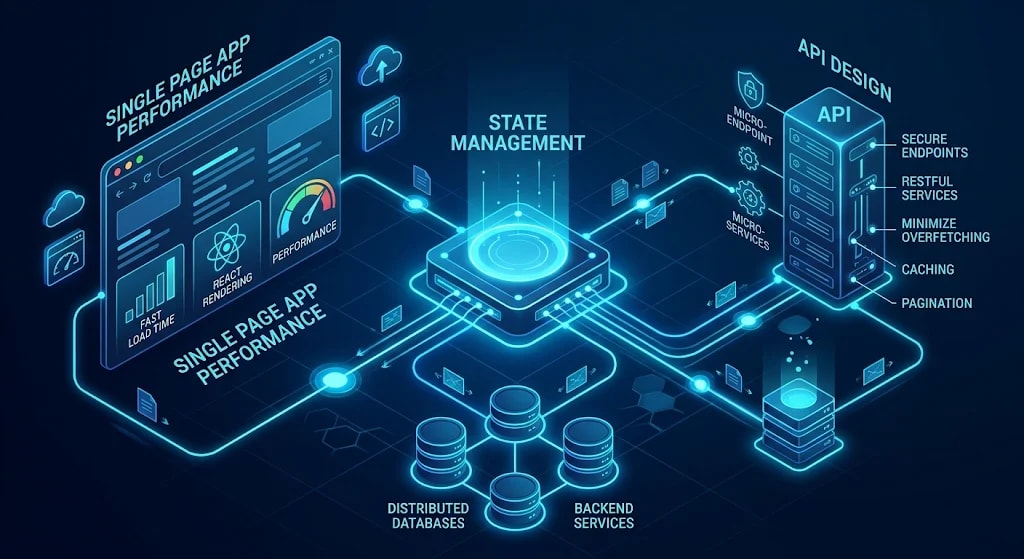
This guide explores the architectural decisions, state management strategies, and API design principles that separate high-performance SPAs from applications that become difficult to maintain over time.
Modern SPA Architecture and Scalability
Understanding Modern SPA Architecture
At their core, SPAs load a single HTML document and dynamically update content through JavaScript. Frameworks such as React and Vue simplify this process through component-based architectures, while modern routing libraries allow applications to switch views without refreshing the page.
As applications grow, architecture becomes the most important factor influencing maintainability.
A well-structured SPA typically includes:
-
UI Components
-
Client-Side Routing
-
State Management Layer
-
API Service Layer
-
Authentication System
-
Caching Mechanisms
-
Error Handling Infrastructure
By separating these concerns, developers can scale features without creating tightly coupled codebases.
Choosing the Right Architectural Pattern
Feature-Based Architecture
Feature-based architecture groups files according to business functionality rather than technical type.
Example:
-
Authentication
-
Dashboard
-
User Management
-
Reports
-
Settings
This approach improves scalability while reducing dependency complexity.
Layered Architecture
Many enterprise applications use a layered approach:
-
Presentation Layer
-
Business Logic Layer
-
Data Access Layer
-
API Layer
This separation improves maintainability and testing.
Microfrontend Architecture
For large organizations, microfrontends allow independent teams to deploy portions of a single SPA without affecting the entire application.
While powerful, this approach introduces additional complexity and should be implemented only when organizational scale requires it.
Effective State Management Strategies for Single Page Applications
State management becomes increasingly challenging as applications evolve.
The question is no longer how to store data, but how to keep data synchronized across components without creating performance bottlenecks.
Local Component State
Local state works best for:
-
Form inputs
-
UI toggles
-
Modal visibility
-
Temporary component data
Keeping state close to where it is used minimizes unnecessary updates.
Shared Application State
As applications expand, data often needs to be shared across multiple views.
Common examples include:
-
User authentication
-
Shopping carts
-
Theme preferences
-
Notifications
-
Global filters
Centralized state management prevents data duplication and inconsistent user experiences.
Server State
One of the most overlooked concepts in SPA development is distinguishing application state from server state.
Data retrieved from APIs should often be cached and synchronized independently from application state.
Examples include:
-
Product catalogs
-
User profiles
-
Analytics dashboards
-
Reporting data
Separating these concerns improves both performance and maintainability.
API Design Best Practices for High-Performance SPAs
Designing APIs for High Performance
A high-performance SPA depends on an efficient backend.
Poor API design can make even the fastest frontend framework feel slow.
Design Consistent Endpoints
Good APIs provide predictable patterns.
Examples:
-
/users
-
/users/{id}
-
/orders
-
/orders/{id}
Consistency reduces frontend complexity and improves developer productivity.
Minimize Overfetching
One of the most common performance issues occurs when APIs return significantly more data than the frontend requires.
Smaller responses:
-
Reduce bandwidth usage
-
Improve page load speed
-
Decrease rendering overhead
Implement Effective Caching
Caching can dramatically improve responsiveness.
Consider caching:
-
Frequently requested data
-
User preferences
-
Static resources
-
Configuration values
Reducing duplicate network requests often produces larger performance gains than frontend optimizations alone.
Support Pagination
Applications should avoid loading large datasets all at once.
Instead:
-
Load data incrementally
-
Use pagination
-
Implement lazy loading
-
Fetch content on demand
This strategy improves perceived performance and reduces memory usage.
Optimizing Client-Side Performance
Performance should be considered during architecture planning rather than after development.
Important optimizations include:
Code Splitting
Load JavaScript only when necessary.
Lazy Loading
Delay loading non-critical components until users request them.
Route-Based Bundling
Separate bundles by application section.
Asset Optimization
Compress images, minimize scripts, and eliminate unused dependencies.
Security Considerations
Performance means little if an application is vulnerable.
Modern SPAs should include:
-
Secure authentication flows
-
Token rotation
-
Input validation
-
API rate limiting
-
HTTPS enforcement
-
Content Security Policies
Security must be integrated into architecture from the beginning rather than added later.
Future Trends in SPA Development
Modern applications continue evolving toward:
-
Server-side rendering hybrids
-
Edge-based deployments
-
Progressive Web Apps
-
AI-assisted interfaces
-
Real-time data synchronization
The underlying goal remains the same: deliver faster, more responsive user experiences while maintaining scalability.
Conclusion
Building a high-performance Single Page Application requires more than selecting a framework. Success depends on architectural planning, thoughtful state management, and efficient API design.
Frameworks help developers build interfaces. Architecture ensures those interfaces remain scalable. State management keeps data predictable. API design determines responsiveness.
When these three areas work together, teams can create SPAs that remain fast, maintainable, and ready for future growth.