The Rise of AI in Mobile App Development
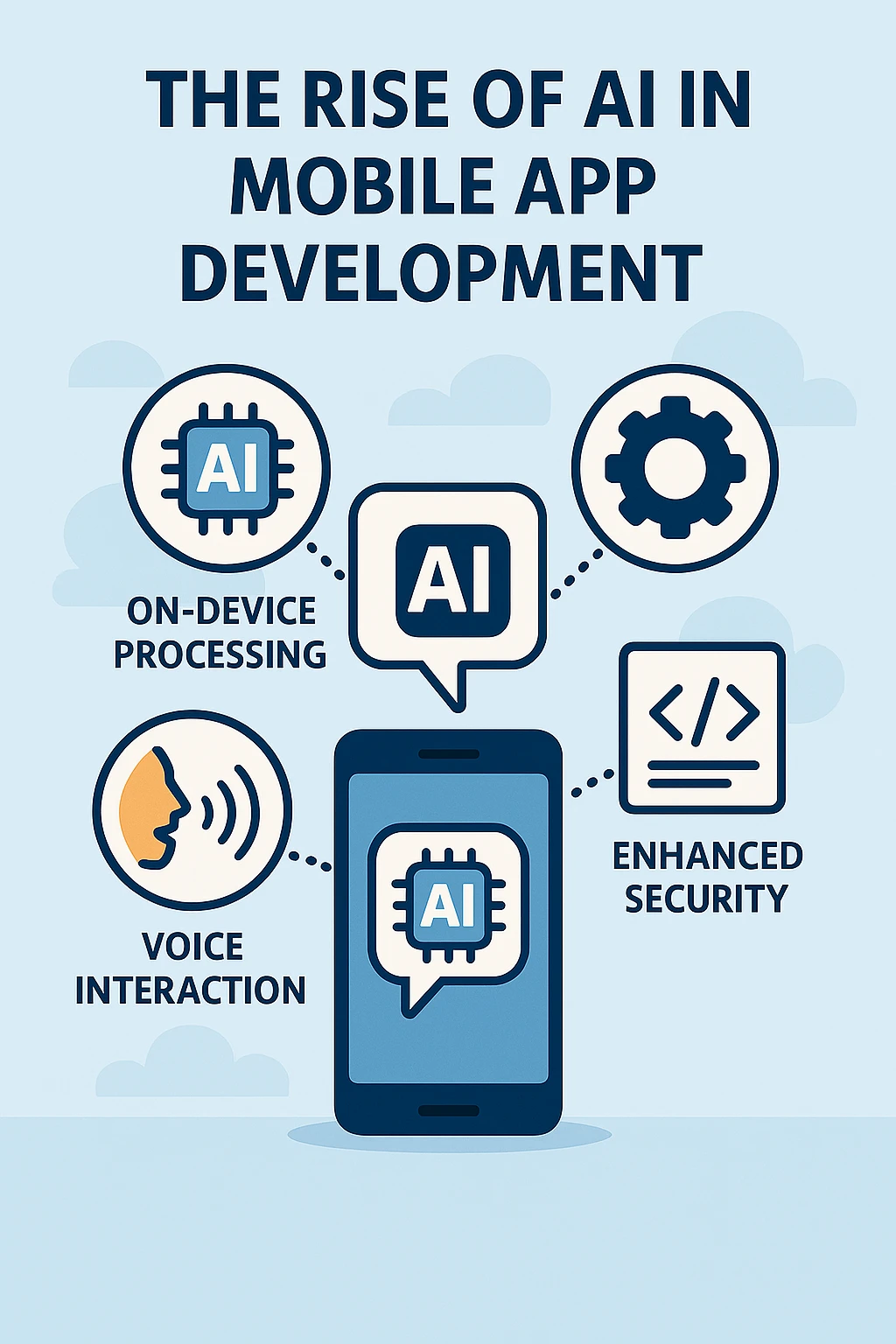
AI is no longer a futuristic concept but an essential component of modern mobile app
development. It refers to
the simulation of human intelligence in machines programmed to think, learn, and
problem-solve. AI empowers apps
to analyze vast amounts of data and make decisions based on that data, transforming
mobile apps into more
intelligent, responsive, and personalized experiences for users.
AI in mobile apps is computer software that can "think" and "learn" like humans. AI
makes apps smarter and more
helpful. For example, it allows virtual assistants in apps to understand voice
commands. It also enables
apps to recognize objects in photos and provide relevant information. Many apps use
machine learning (ML), a
type of AI. ML lets apps automatically improve based on experience and data.
The integration of AI into mobile app development offers numerous benefits, making
apps more intuitive and
user-friendly. AI algorithms can automate repetitive tasks, freeing up developers to
focus on more critical
areas of app development. Ultimately, AI streamlines development processes, enhances
user experience, and drives
innovation across various industries.
- Automation: AI-powered tools and algorithms can automate several
time-consuming and repetitive tasks,
enabling developers to focus on more critical areas of app development.
- Improved Efficiency: AI enables mobile apps to perform tasks faster than
humans in most instances.
Whether it's processing data, responding to customer queries, or managing
workflows, AI provides businesses with
the means to enhance their efficiency.
Key Trends Shaping AI Mobile Apps by 2026
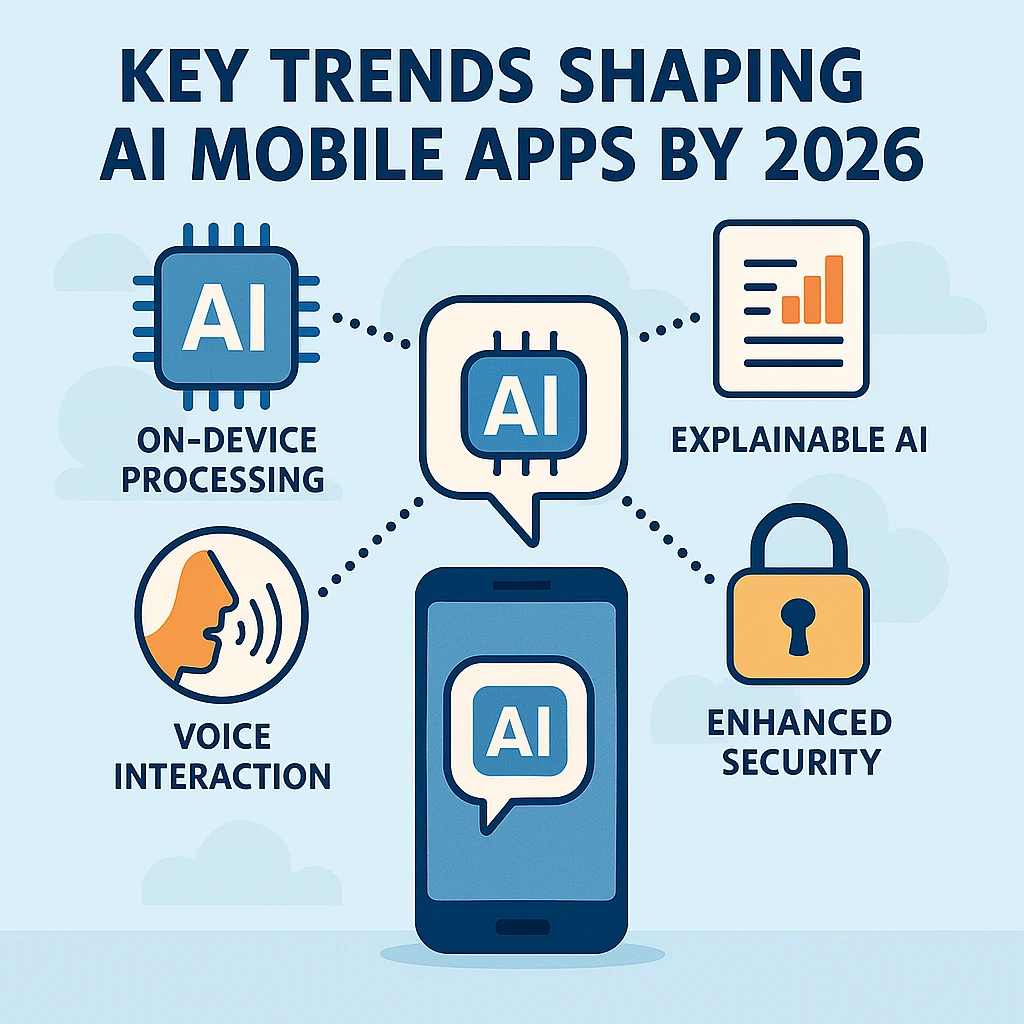
Several key trends are poised to define the landscape of AI-powered mobile apps in
2026. These include
advancements in personalization, user experience, and security, all driven by the
increasing capabilities of AI
technologies. By understanding these trends, developers and businesses can prepare
to leverage AI
effectively and create innovative mobile solutions.
Emerging technologies are projected to influence mobile app companies in 2026:
In-app AI powers features such as chatbots, recommendation engines, and predictive
analytics, making apps smarter and
more adaptive to individual needs. Mobile apps are increasingly embedding machine
learning and generative-AI
capabilities to deliver hyper-personalized experiences, automate routine tasks, and
predict user needs before they
even arise.
- AI Chatbots & Virtual Assistants: Enhanced customer service and
engagement.
- Generative AI in App Development: Faster app development and improved
creativity.
- AI-Powered Personalization: Smart recommendations and adaptive user
interfaces.
Personalization and Predictive Capabilities
Personalization is a cornerstone of modern mobile apps, and AI takes it to the next
level. By analyzing user
behavior, preferences, and past interactions, AI algorithms can deliver tailored
content, recommendations, and
experiences. This level of personalization increases user engagement and
satisfaction, making apps more valuable
and indispensable.
Predictive analytics, powered by AI, enables apps to anticipate user needs and offer
proactive solutions. For
example, an e-commerce app could predict what a user might want to purchase based on
their browsing history.
Similarly, a travel app could suggest optimal travel times based on traffic
patterns. These predictive
capabilities streamline user interactions and enhance the overall app experience.
AI applications in mobile apps help make user interactions engaging and learn more
about the customers. That
includes image analysis, self-learning, security, and data processing. According to
statista.com, the worldwide
market worth of Artificial Intelligence is going to cross $89 Billion by 2025. It
plays a key role in mobile app
development which enables you to develop intelligent applications that can transform
and ease human needs.
Enhanced User Experience with AI
AI significantly enhances the user experience (UX) in mobile apps through various
features and functionalities.
Chatbots and virtual assistants provide instant customer support, answer queries,
and perform tasks, making
interactions seamless and efficient. Voice recognition technology allows users to
interact with apps
hands-free, adding convenience and accessibility.
AI-driven interfaces adapt to user preferences and behaviors, creating a more
intuitive and user-friendly experience
. For example, an app might adjust its layout or color scheme based on the user's
past interactions or time
of day. AI also improves accessibility for users with disabilities, offering
features like voice commands
and screen readers. Ultimately, AI makes mobile apps more engaging, efficient, and
enjoyable to use.
AI makes user interactions in mobile apps more intuitive and personalized. AI-powered
sentiment analysis used in
mobile app development can interpret a user's emotions. It can understand his
opinion about the
product/service/information. Moreover, AI-infused technologies such as NLP, image,
and intelligent character
recognition help enterprises gain customer loyalty.
AI-Powered Security Features
Security is a paramount concern in mobile app development, and AI offers powerful
tools to protect user data and
prevent fraud. AI algorithms can detect anomalies and suspicious activities in
real-time, identifying and
mitigating potential security threats. Biometric authentication, such as facial
recognition and fingerprint
scanning, adds an extra layer of security, ensuring that only authorized users can
access sensitive information.
AI also plays a crucial role in ensuring data privacy and compliance with regulations
like GDPR. By
anonymizing user data and implementing robust security measures, AI helps protect
user privacy while still enabling
personalized experiences. In 2026, users will expect mobile apps to prioritize
security and privacy, making
AI-powered security features a must-have.
AI is essential in strengthening app security. Fraud Detection: AI algorithms detect
suspicious activities,
reducing fraud risks in financial and e-commerce applications. Biometric
Authentication: AI enhances security
through facial recognition, fingerprint scanning, and voice authentication.
AI-driven Threat Detection: AI
identifies vulnerabilities and prevents security breaches by analyzing user patterns
and anomalies.
Challenges and Opportunities in AI Mobile App Development
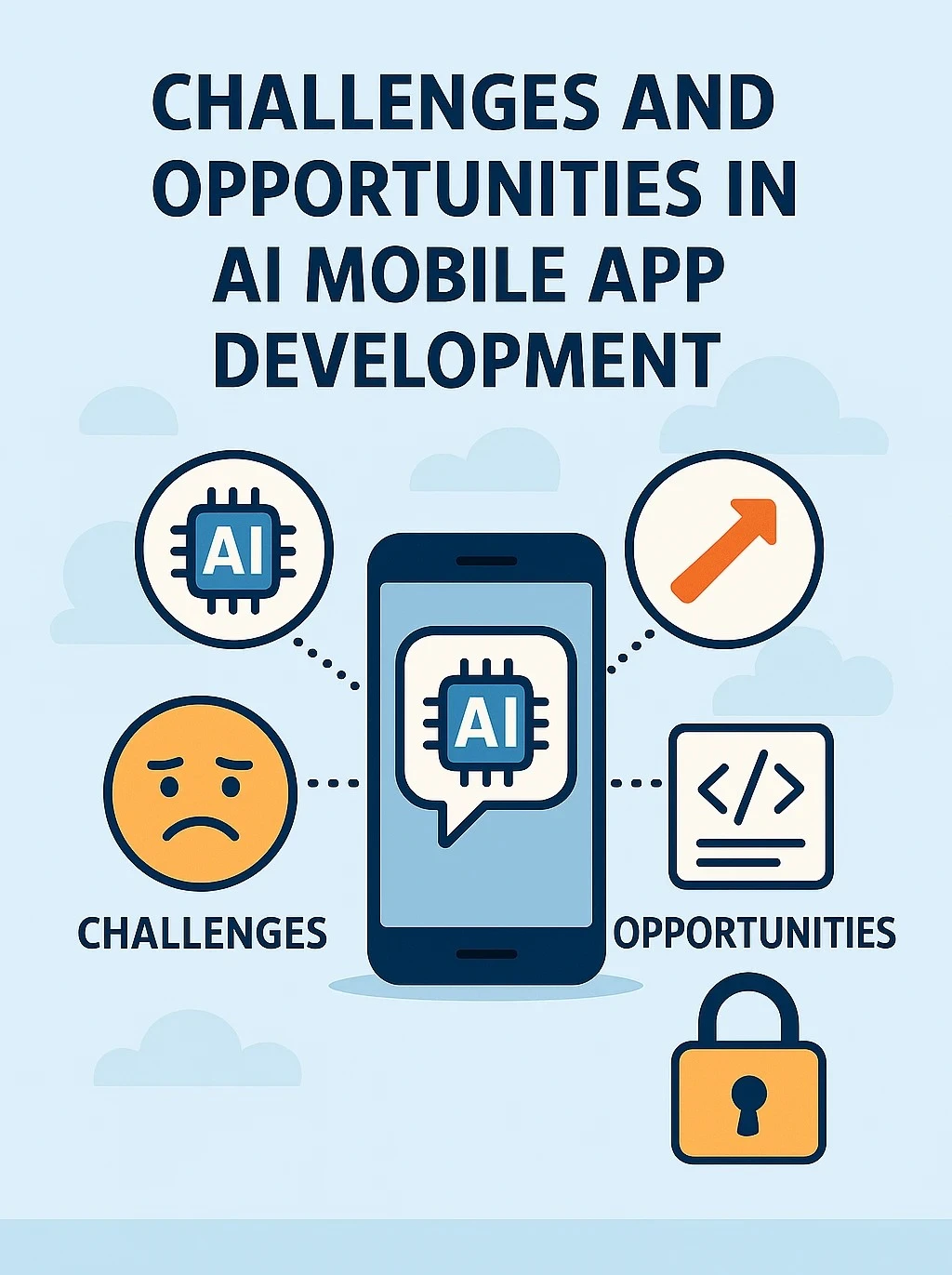
While AI offers tremendous potential for mobile app development, it also presents
several challenges. These
include managing data quality and quantity, addressing ethical concerns, and
integrating AI seamlessly into existing
business processes. Overcoming these challenges requires careful planning, strategic
decision-making, and
a commitment to responsible AI development.
Despite the challenges, the opportunities in AI mobile app development are vast.
Businesses can leverage AI
to create innovative solutions, enhance customer engagement, and gain a competitive
edge. Developers can
explore new frontiers in app development, building intelligent and adaptive
applications that meet the evolving
needs of users. By embracing AI responsibly and strategically, businesses and
developers can unlock its
full potential and shape the future of mobile technology.
Challenges in integrating AI into mobile apps include managing biases in AI models,
ensuring data privacy, and
handling computational demands. Companies also need to address the scarcity of
training datasets, data
compatibility issues, and skill gaps.
Preparing for the Future of AI-Driven Mobile Applications
To prepare for the future of AI-driven mobile applications, developers and businesses
need to adopt a proactive and
strategic approach. This includes investing in AI training and education, fostering
collaboration between AI
experts and app developers, and staying up-to-date with the latest AI trends and
technologies.
It's also crucial to prioritize ethical considerations and ensure that AI is used
responsibly and transparently. By focusing on user needs, addressing potential
biases, and safeguarding data privacy, developers and businesses
can build trust and create AI-driven mobile applications that benefit society as a
whole. The future of
mobile apps is intelligent, personalized, and secure, and those who prepare now will
be best positioned to succeed.
Essential steps to effectively integrate AI into mobile app development or the apps
themselves:
- Identify opportunities for AI integration: Evaluate existing features,
user interactions, and performance
metrics to find inefficiencies and opportunities for enhancements.
- Define objectives and success metrics: Set specific, measurable, and
achievable goals for your project
that AI can help you achieve.
- Choose technologies and tools: Outline the tech stack based on project
needs and target audience.
- Build and train AI models: Data Preparation: Work with data collected in
previous steps or when the
cleaning process is conducted. By partitioning the data, arrange and divide
datasets into training, validation,
as well as the test data for model training.
- Validate the AI model: Validate AI models using test data to ensure they
produce satisfactory
results before proceeding.
- Integrate AI into the app: API Integration: Integrate AI components in
pure code, using APIs or SDKs
from chosen frameworks and libraries. Select them in a way that will ensure
compatibility and integration within
the architecture of the app.
- Monitor and optimize: AI models require ongoing maintenance and
improvement to maintain accuracy and
effectiveness. Developers need to allocate resources for monitoring model
performance and retraining them
with new data as needed.
Conclusion
AI is poised to revolutionize mobile app development, offering unprecedented
opportunities to create intelligent,
personalized, and secure app experiences. By understanding the key trends,
challenges, and opportunities in
AI-driven mobile app development, developers and businesses can prepare for the
future and unlock the full potential
of this transformative technology. As we move closer to 2026, the integration of AI
into mobile apps will
only continue to grow, shaping the way we interact with technology and the world
around us. Embrace the
future of AI in mobile app development and embark on a journey of innovation,
creativity, and success.
The future of mobile development in 2025-2026 and beyond is poised for significant
transformation. AI, 5G,
blockchain, and sustainability will shape the next generation of apps, making them
smarter, faster, and more secure
. Businesses and developers must stay ahead of these trends to remain competitive in
the ever-evolving digital
landscape.
Are you ready to embrace the future of mobile development? The time to innovate is
now!